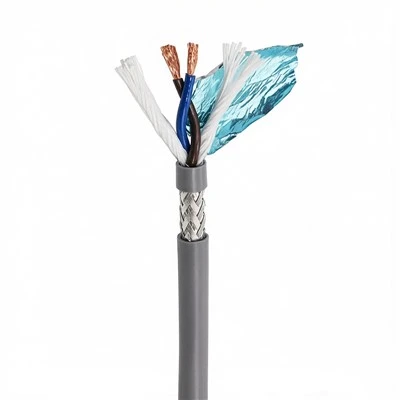
As a supplier of computer cables, I often get asked by customers how they can determine if a cable supports fast charging for their laptops. It’s a crucial question, especially in today’s fast – paced world where time is of the essence. In this blog post, I’ll share some key factors to consider when assessing whether a cable can provide fast – charging capabilities for laptops. Computer Cables
Understanding the Basics of Fast Charging
Before delving into how to identify a fast – charging cable, it’s essential to understand what fast charging actually means. Fast charging is a technology that allows a device, in this case, a laptop, to charge at a significantly higher rate than the standard charging speed. This is achieved by increasing the power output, usually through higher voltage or current, or a combination of both, while ensuring the safety of the device’s battery.
Laptops typically use the USB – C or Thunderbolt port for charging, and these ports have standards that define fast – charging capabilities. For example, USB Power Delivery (PD) is a widely adopted standard that supports fast charging over USB – C cables. It can deliver power levels of up to 100W or more, depending on the specific implementation.
Checking the Cable’s Specifications
The first step in determining if a cable supports fast charging for your laptop is to check its specifications. These details are usually printed on the cable itself, on the packaging, or in the product documentation.
- Power Rating: Look for the power rating, usually measured in watts (W). A higher wattage indicates a greater ability to deliver power quickly. For a laptop, a cable with a power rating of at least 65W or higher is often recommended for fast charging, especially if you have a high – performance laptop. For instance, many gaming laptops or laptops with large – screen displays and powerful processors require cables with 90W or 100W power ratings to charge rapidly.
- Current and Voltage: The current is measured in amperes (A), and the voltage in volts (V). According to the formula P = VI (Power = Voltage x Current), a cable that can handle higher current and voltage values will be able to deliver more power. For example, a USB – C cable with a 20V, 3.25A rating can deliver 65W of power (20V x 3.25A = 65W). Make sure the cable’s current and voltage ratings match or exceed the requirements of your laptop’s power adapter.
- USB Standard: Check the USB standard that the cable supports. Newer standards like USB 3.1 Gen 2 and USB 4 are more likely to support fast charging than older standards like USB 2.0. USB – C cables that are certified for USB Power Delivery (PD) are a good choice for fast charging laptops.
Compatibility with Your Laptop
Even if a cable has the right specifications, it may not support fast charging for your laptop if it’s not compatible.
- Port Type: Ensure that the cable’s connectors match the ports on your laptop. Most modern laptops use USB – C or Thunderbolt ports for charging. If your laptop has a USB – C port, make sure the cable has a USB – C connector on both ends. Some laptops may also have proprietary charging ports, in which case you’ll need a cable specifically designed for that laptop model.
- Laptop’s Charging Requirements: Different laptops have different charging requirements. Some laptops may support fast charging only with certain types of power adapters or cables. Check your laptop’s user manual or the manufacturer’s website to find out the recommended cable and power adapter for fast charging. For example, Apple’s MacBook Pro series requires specific USB – C cables and power adapters to achieve fast – charging speeds.
Physical Characteristics of the Cable
The physical construction of the cable can also give you clues about its fast – charging capabilities.
- Cable Thickness: Generally, thicker cables are better at handling higher power loads. This is because they have lower resistance, which means less energy is lost as heat during the charging process. A thicker cable can also better handle the increased current required for fast charging without overheating.
- Quality of Connectors: The connectors at the ends of the cable should be of high quality. Loose or poorly made connectors can cause a poor electrical connection, which can lead to slower charging speeds or even pose a safety risk. High – quality connectors are typically made of durable materials and have a snug fit in the laptop’s ports.
Brand and Certification
The brand of the cable and its certifications can also be indicators of its fast – charging capabilities.
- Reputable Brands: Well – known brands in the cable industry often have a reputation for producing high – quality products. These brands are more likely to invest in research and development to ensure their cables meet the latest standards for fast charging. Brands like Anker, Belkin, and Cable Matters are known for their reliable computer cables.
- Certifications: Look for cables that are certified by recognized organizations. For example, cables with the USB Implementers Forum (USB – IF) certification for USB Power Delivery have been tested to meet the industry standards for fast charging. Certifications provide assurance that the cable is safe and performs as advertised.
Testing the Cable
If you’re still unsure whether a cable supports fast charging for your laptop, you can perform a simple test.
- Charge Time Comparison: Charge your laptop with the cable in question and note the time it takes to reach a certain battery level, such as from 0% to 50%. Then, compare this time with the charging time using the original cable that came with your laptop. If the new cable charges the laptop significantly faster, it likely supports fast charging.
- Power Monitoring Software: Some laptops have built – in power monitoring software or you can use third – party applications to monitor the power input during charging. Check the power reading to see if it’s close to the expected fast – charging power level for your laptop.
Conclusion
Determining if a cable supports fast charging for your laptop involves checking the cable’s specifications, ensuring compatibility with your laptop, considering the physical characteristics, looking at the brand and certification, and even performing some simple tests. As a computer cable supplier, I can offer a wide range of cables that meet the diverse needs of laptop users. Whether you’re a casual user looking for a reliable cable for everyday charging or a power user who needs fast charging for your high – performance laptop, we have the right solution for you.
High-temperature Cables If you’re interested in purchasing high – quality computer cables that support fast charging, don’t hesitate to reach out to us for a detailed discussion on your requirements. We can provide you with the best cables at competitive prices and ensure that you get the optimal charging experience for your laptop.
References
- USB Implementers Forum official documentation
- Laptop manufacturers’ user manuals for charging specifications
- Industry research reports on computer cable technology
Anhui Yuantong Cable Co., Ltd.
As one of the most professional computer cables manufacturers and suppliers in China, we offer a wide range of cables with superior quality. Please feel free to wholesale bulk customized computer cables from our factory. Also, pricelist is available.
Address: Yongfeng Industrial Park, Tianchang City, Anhui Province
E-mail: ahytcable@126.com
WebSite: https://www.yuantongcable.net/
